
Every collection begins with a material. Solid Echo began by questioning one we had never truly understood.
For years, stone has been the material closest to us. Metal was always there, but somehow remained unexplored. Solid Echo began when we decided it was finally time to understand it—not simply as a structural material, but as something capable of holding memory, sound and tension.
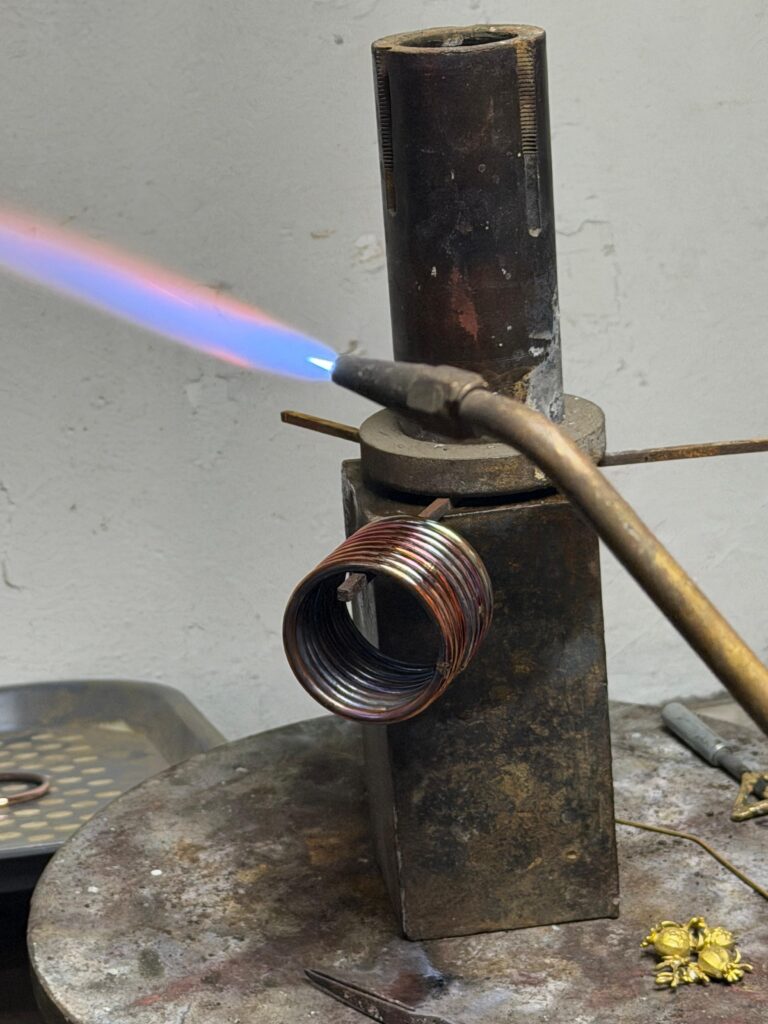
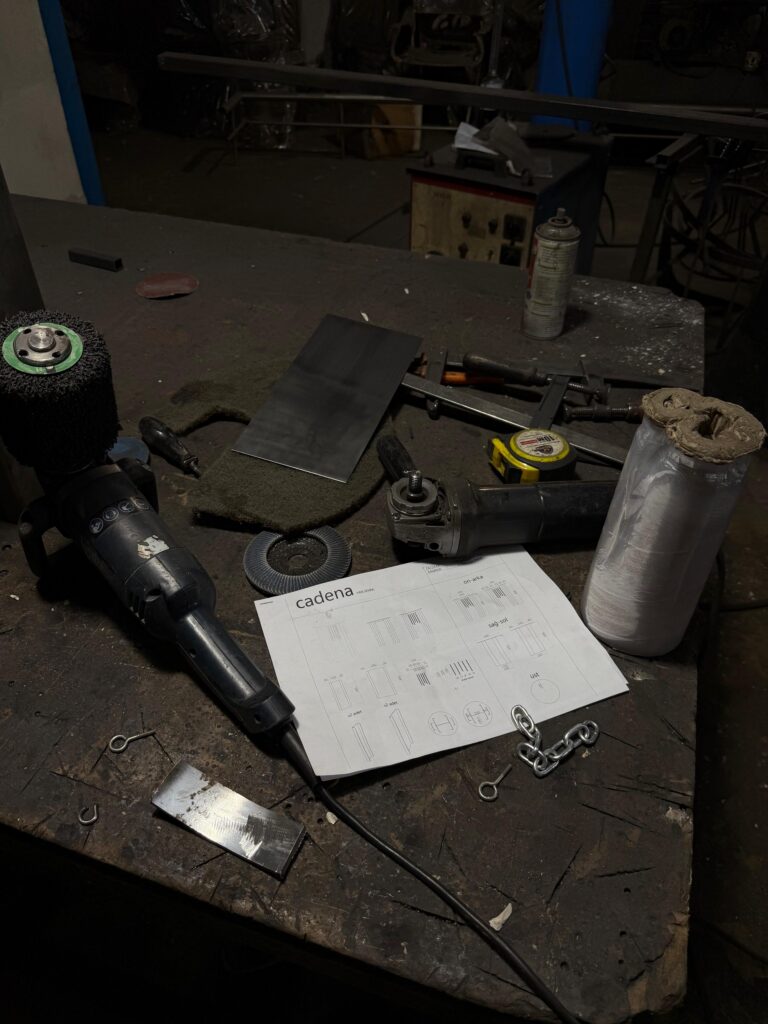
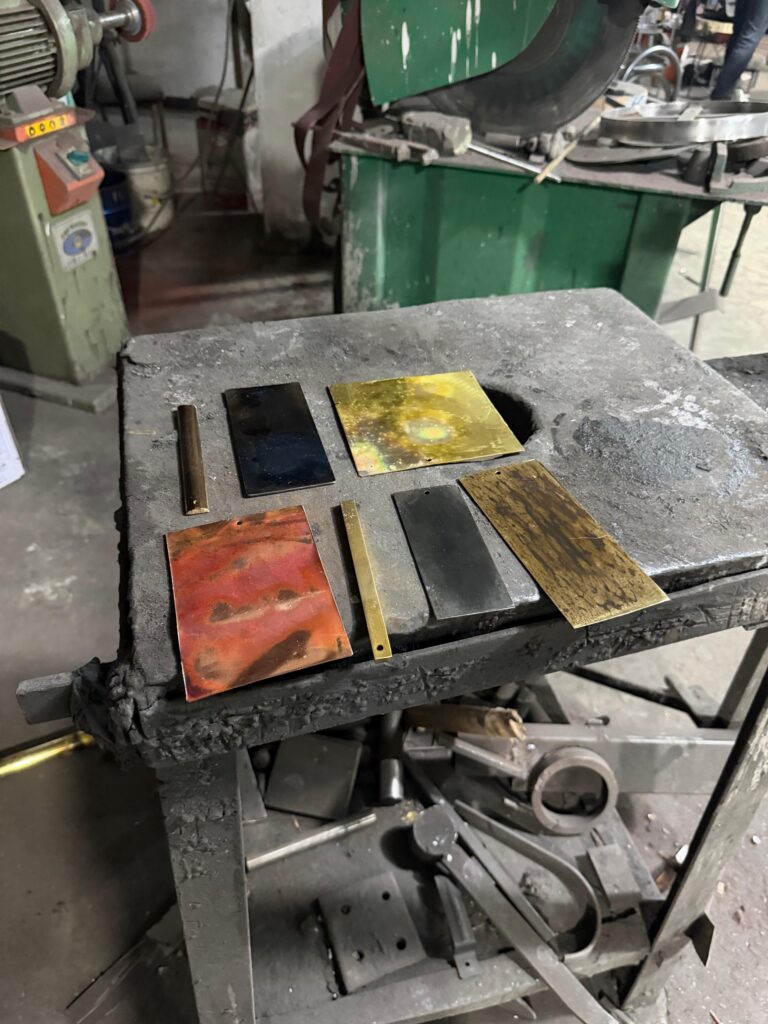
Solid Echo is Studio Mohs’ first collection centered around metal. It began with a simple curiosity. Metal offers an extraordinary range of possibilities, both technically and emotionally. Oxidation, heat treatment, bending and hand sanding all reveal different characteristics depending on the metal. Among its countless possibilities, we found ourselves drawn to resonance, reflection and the restrained tension held within the material itself. The sound, the vibration, the transformation, the reflection, the echo. So, the story started with these keywords and Solid Echo became an ongoing material study.
Entering an unfamiliar material meant questioning almost everything. From different alloys to surface treatments and fabrication methods. That process of learning became part of the project itself. The research begins with three pieces.
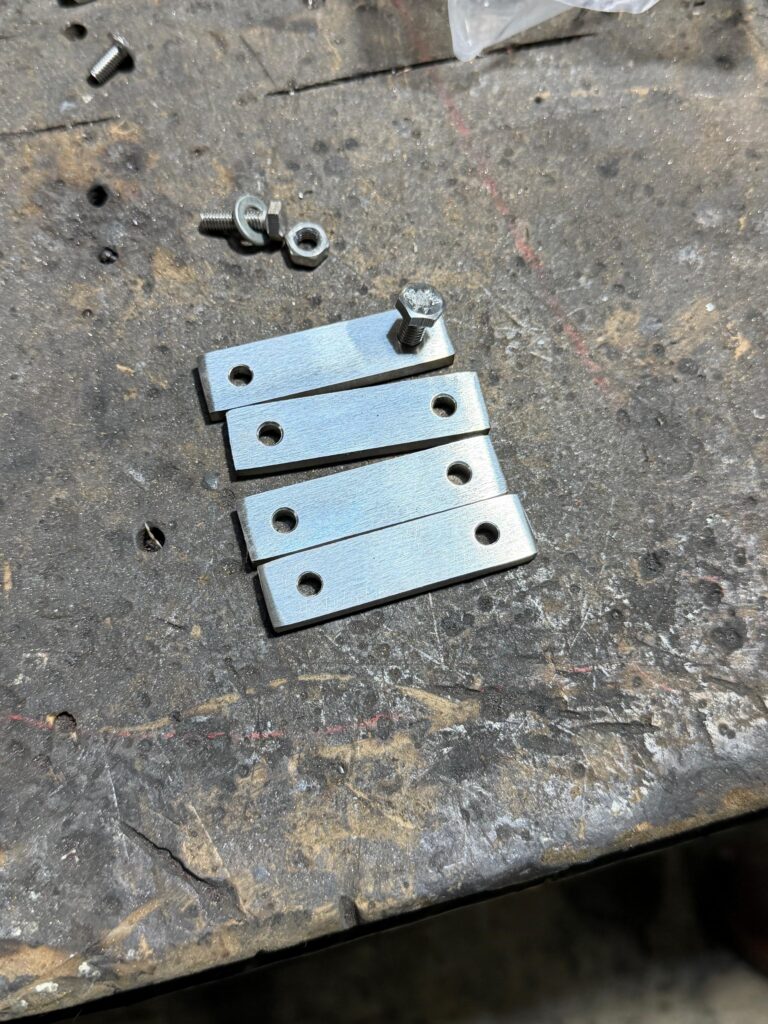
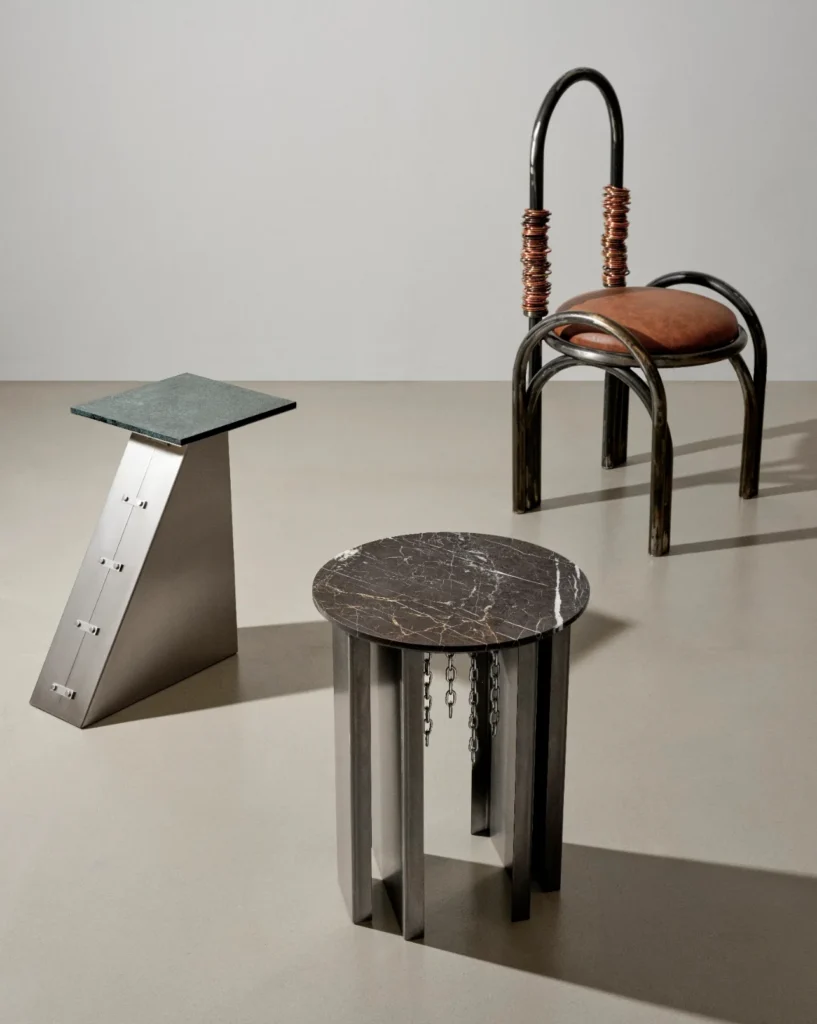
Coraza, Argolla and Cadena. Together they investigate the interaction between different metals through the subtle sounds and vibrations generated by contact, the traces retained within surfaces, and the processes of oxidation, patina, and material transformation over time.
Coraza Side Table
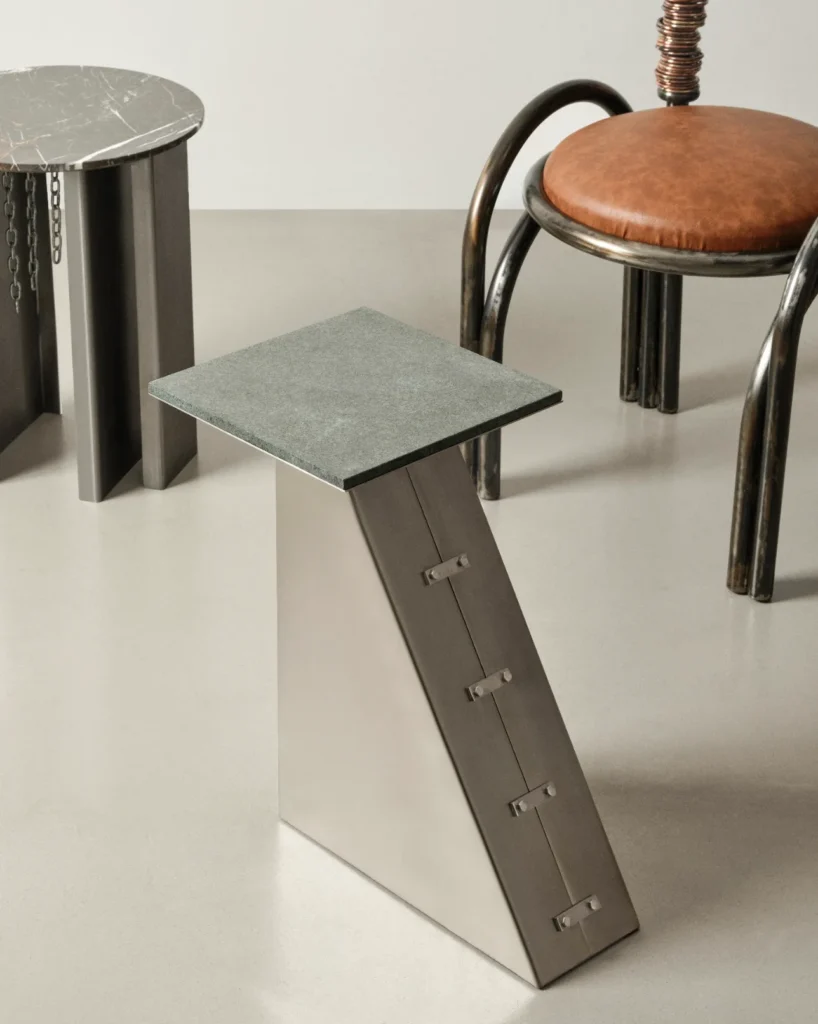
Coraza was the first piece that we designed. At the time, stainless steel had become increasingly prominent in contemporary collectible design, which naturally led us to explore it as the starting material for the collection. To remain connected to Studio Mohs’ design language, we returned to geometry and the volcanic diabase stone. The combination of these two materials immediately fascinated us.
From there, we became interested in revealing the latent tension held within material. The steel was conceived as a continuous folded surface, almost like a sheet of origami translated into metal. We wanted to make it all from one piece and connect them with visible screws, to emphasize the tension. Our intention was to fold the entire structure from a single sheet without welding. In practice, the dimensions exceeded the limits of the bending machine. So it required the body to be fabricated in two sections and being welded together. The compromise became part of the story rather than something to conceal. The diabase top is centered geometrically, yet appears subtly displaced. That visual ambiguity creates a quiet sense of imbalance, as if the stone is suspended at the threshold of movement.
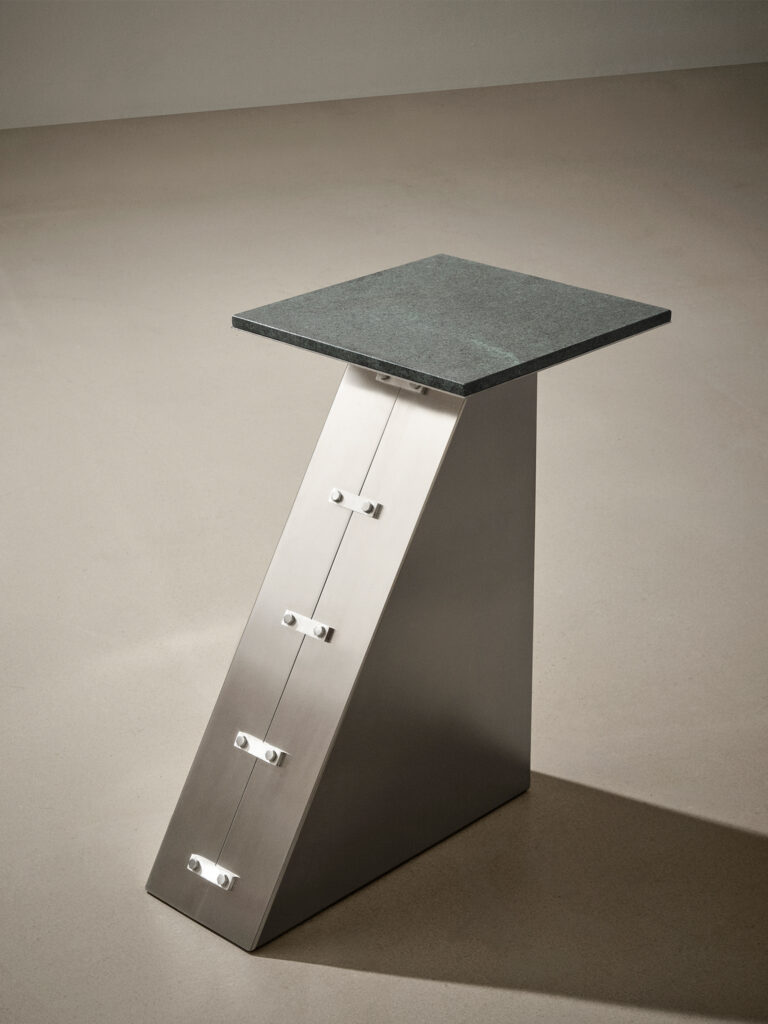
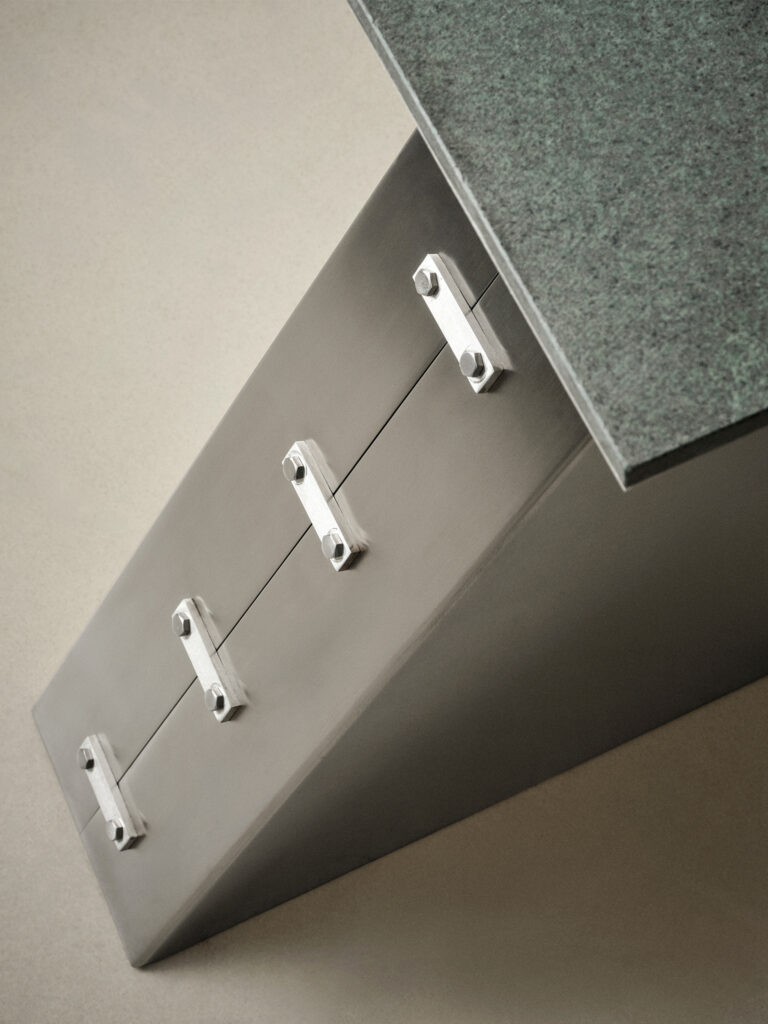
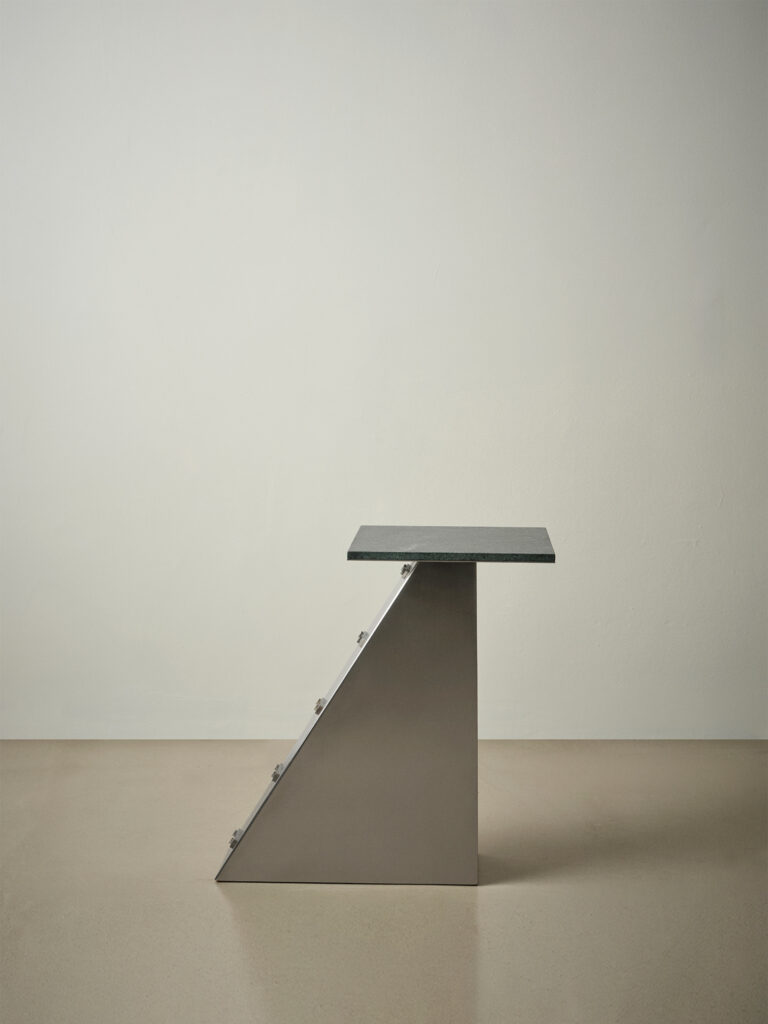
Folded stainless steel, volcanic diabase stone and exposed mechanical connections come together in a composition where structure itself becomes expression.
Argolla Chair
Argolla is a chair that witnessed a lot of transformations. The starting point for Argolla was the tubular steel frame, a defining element of Bauhaus and 1970s furniture design. Yet simply recreating a tubular steel chair was never the intention.
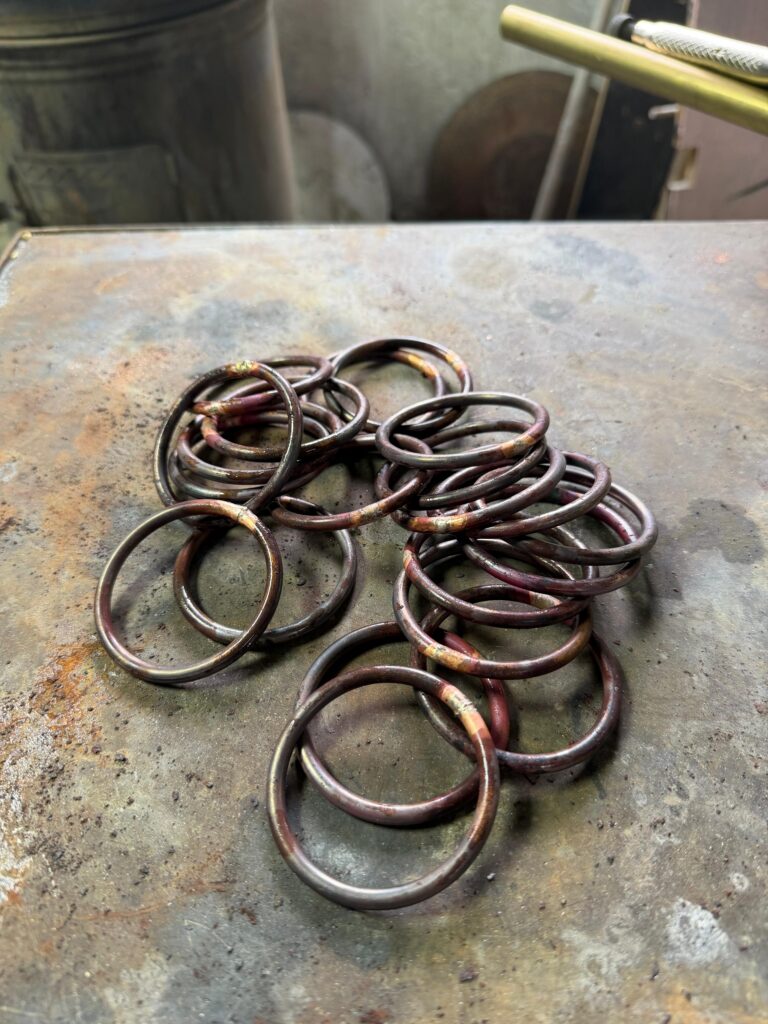
The familiar structure needed another layer of meaning. Like Coraza, Argolla also required a material intervention that would reveal another characteristic of metal—not only its structure, but its ability to resonate. Copper felt like the obvious counterpart. Unlike stainless steel, its surface constantly changes, recording oxidation, heat and touch over time. Initially every hoop was mirror-polished. As we experimented with the material, however, we became fascinated by the unexpected colors produced through flame treatment. That curiosity gradually expanded into a series of surface experiments involving heat, oxidation, acid reactions and hand polishing.
After these experiments rather than leaving the steel pristine, we wanted the frame to feel as though it had quietly evolved over decades. Countless oxidation tests eventually led to the hand-finished surface that defines the final piece.
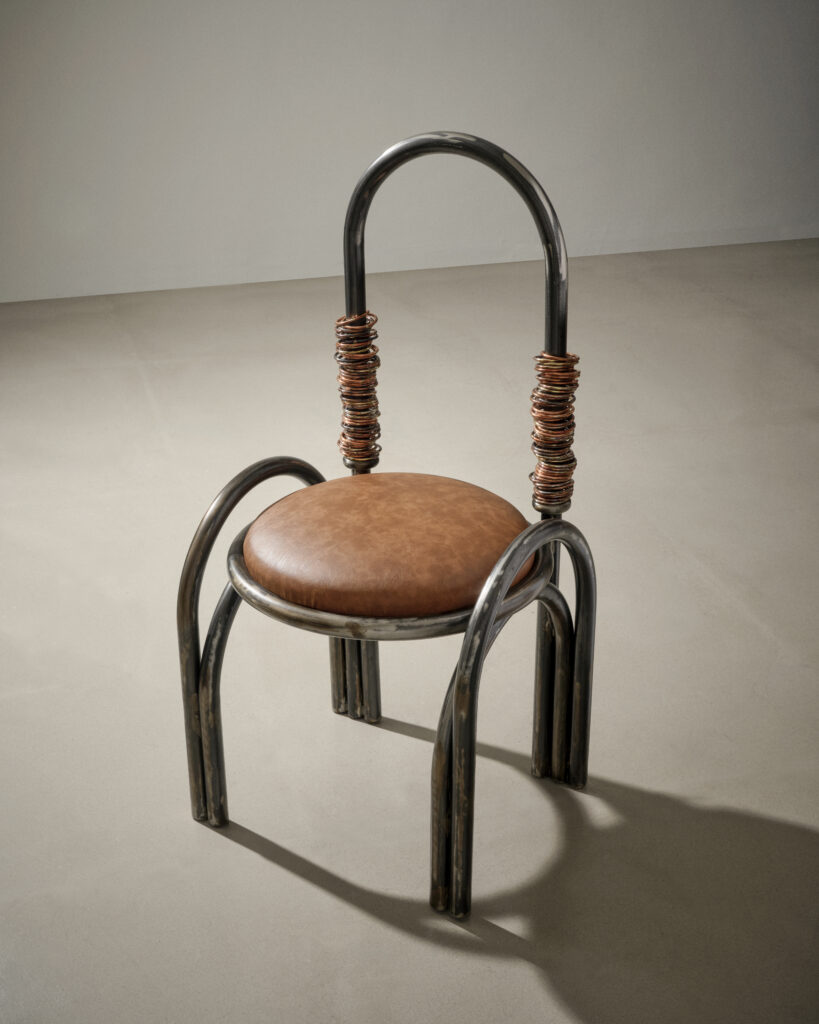
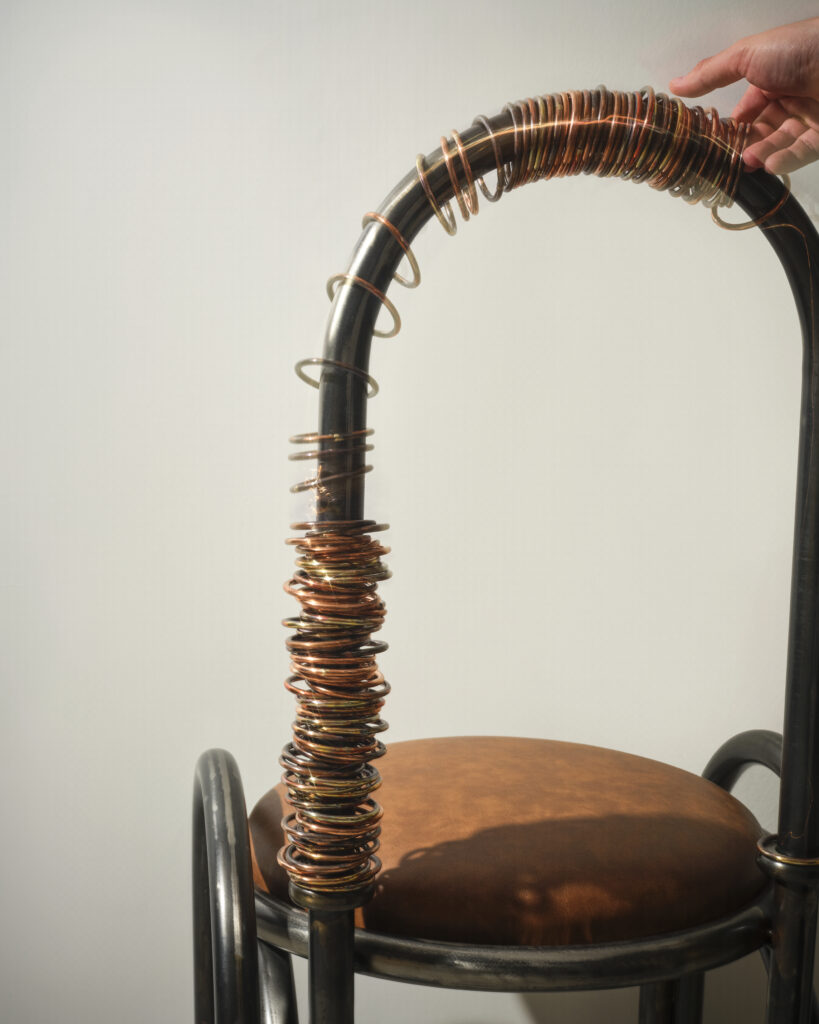
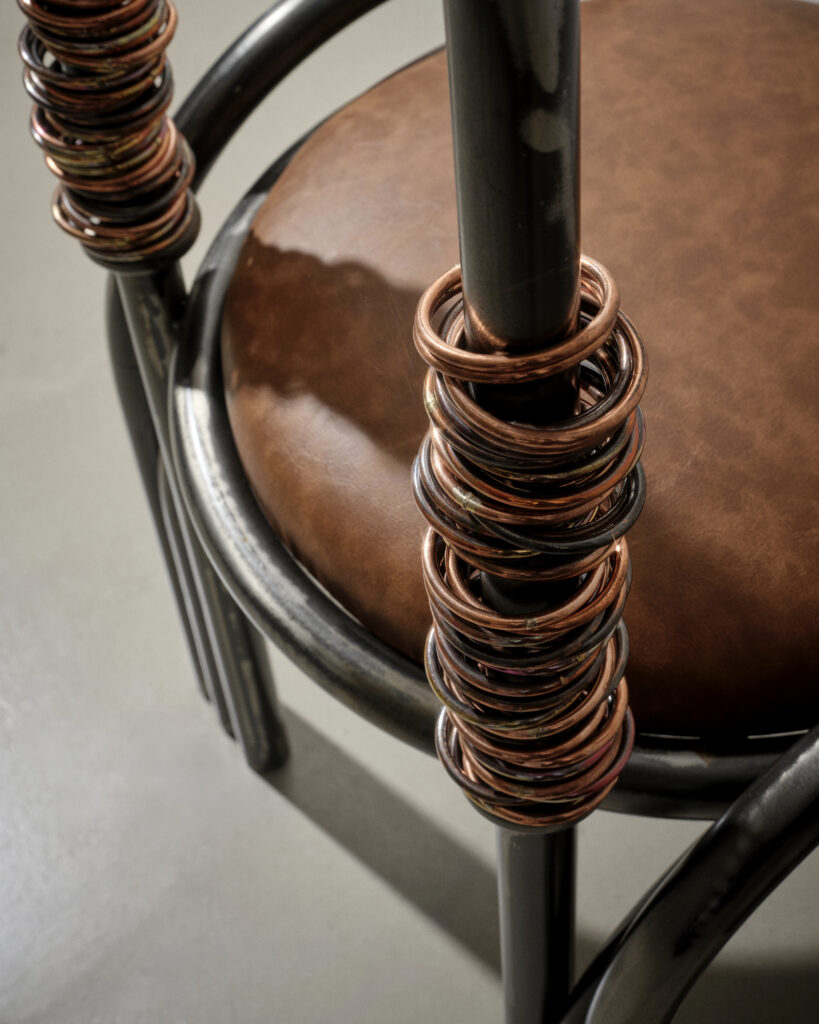
As the hoops slide, collide, and settle along the oxidized steel frame, they generate subtle sounds and vibrations while gradually leaving traces on both copper and steel. Their continuous interaction allows the surfaces to record contact and time, reinforcing the collection’s exploration of material memory. The cognac upholstery introduces a warm material contrast, balancing the industrial character of steel and copper within a restrained composition.
Cadena Side Table
Cadena began with a simple idea: introducing chains as a dynamic element rather than a decorative one. What interested us was not only their industrial character, but the tension they create while hanging, their subtle movement, and the quiet sound they produce as they sway and contact one another. Once again, we wanted to introduce a small metal intervention that could become the focal point of the piece while revealing another characteristic of the material.
The base was initially designed as a much heavier, more solid volume. As the weight increased, we began exploring how bent steel could create the same visual presence without relying on mass alone. By folding the edges inward, the form gains thickness while allowing the surrounding void to become part of the object itself.
For Cadena we didn’t want a perfectly polished steel tone. We wanted the surface to retain visible traces of its making. Through a series of circular hand-sanding experiments with different abrasives, we searched for a finish that felt understated—less like a deliberately applied texture and more like the subtle marks that naturally emerge through friction, handling, and time. The Toros Black marble was chosen for its dynamic surface. Its naturally flowing veining introduces movement of a different kind creating a dialogue between the suspended chains and the slow memory embedded within stone.
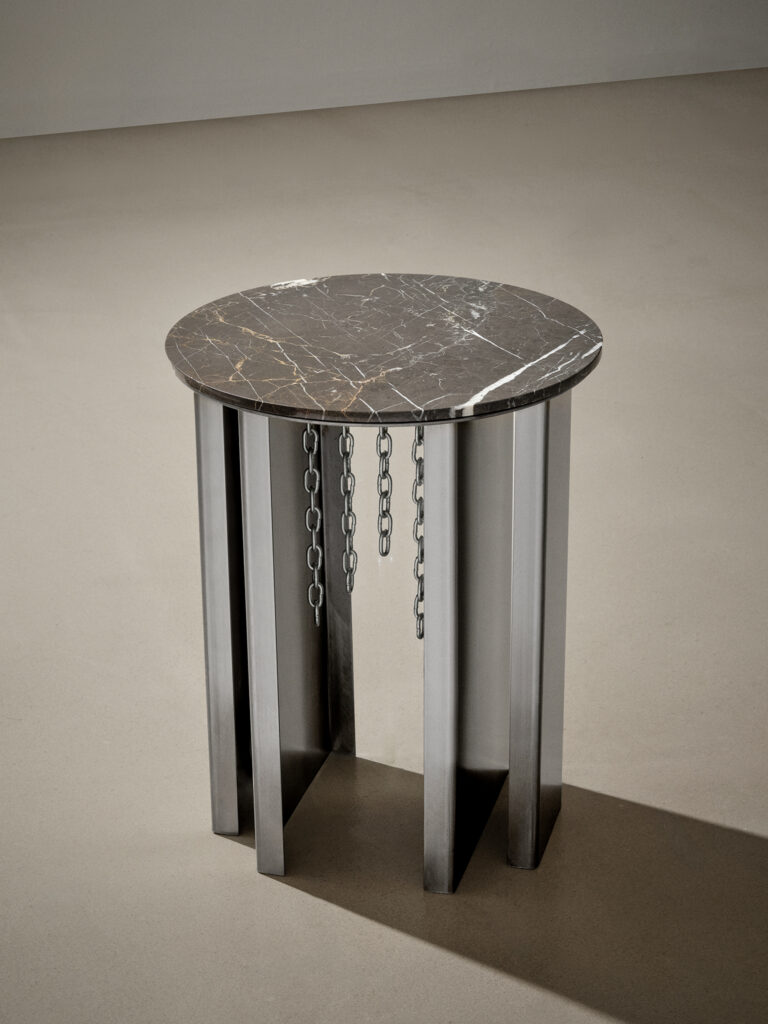
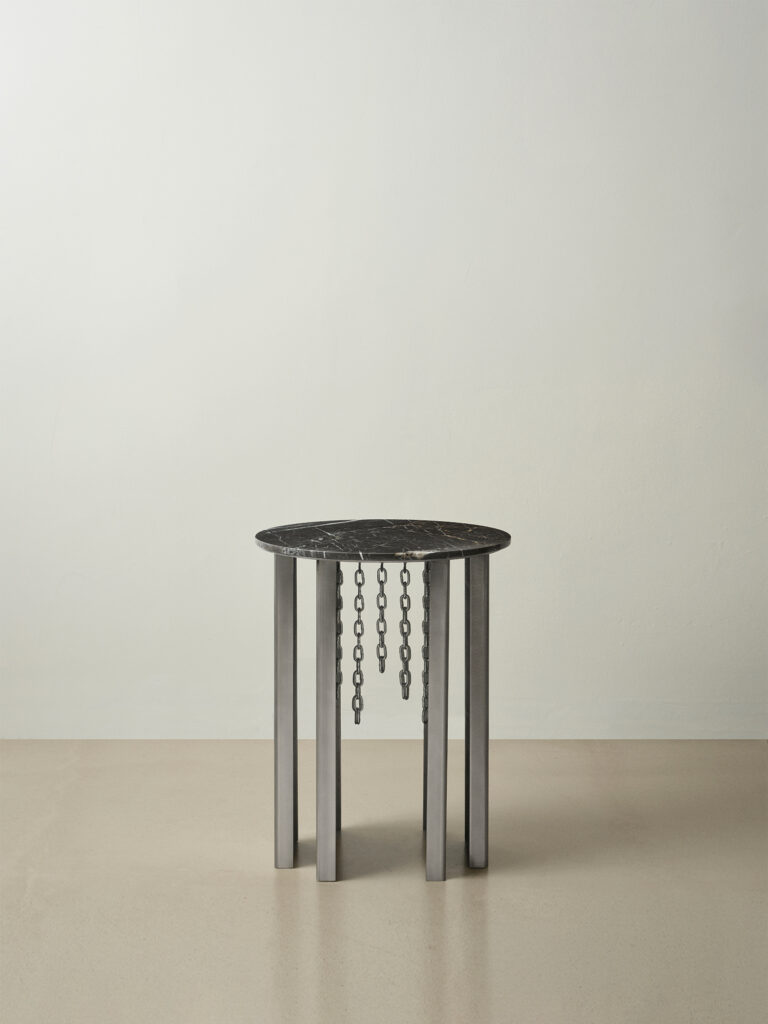
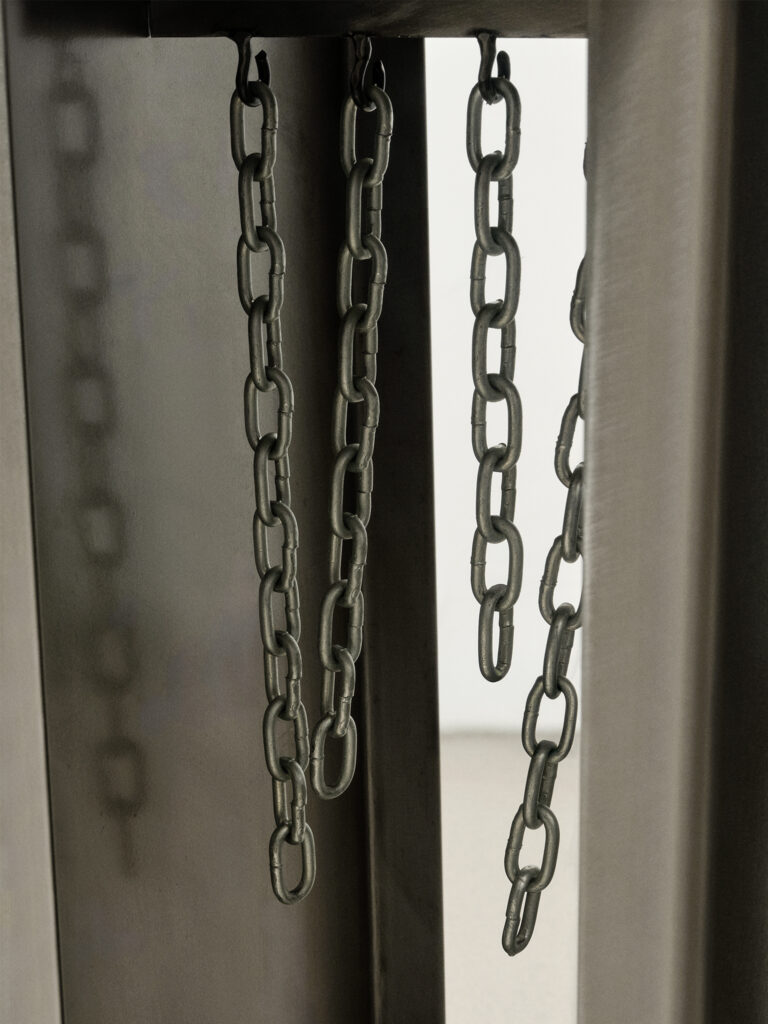
The chains are intentionally removable. They can be detached, rearranged, or even replaced with other suspended objects. This openness allows the piece to evolve through interaction rather than remain fixed. Through interaction, sound, and the quiet instability of its hanging elements, the object remains in a state of suspended tension.
Solid Echo is conceived as an ongoing collection that will continue to evolve through future editions. Each new work expands the research through different functional objects, exploring new material interventions and the evolving relationship between metal and stone.
Designers: Zeynep Saz – Laçin Bezirci
Photo Credits: Ozan Gür – Studio These Days